
The Meeting-to-Code Pipeline: Automating Technical Implementation
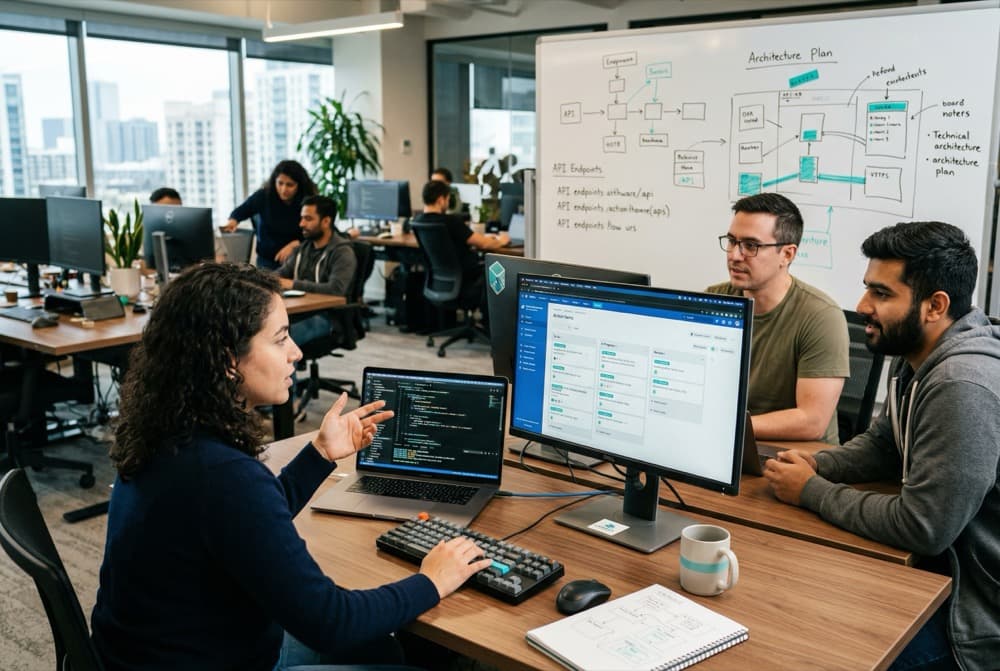
In the high-velocity engineering cultures of 2026, the traditional handoff—from whiteboard to ticket, from ticket to spec, and from spec to code—has become a structural bottleneck. Every layer of manual translation introduces "context decay": the subtle loss of architectural nuance, edge-case warnings, and "why" behind a decision that was crystal clear during the brainstorming session but is absent from the Jira ticket.
The industry is shifting toward Context-Aware Coding. In this new paradigm, the primary source of truth isn't a static document; it’s the high-fidelity recording of the technical discussion itself. By leveraging conversational retrieval, engineering teams are now bypassing document-based handoffs entirely, feeding implementation requirements directly from Upmeet into their development environments.
The Death of the Manual Spec
For decades, the "Technical Requirements Document" (TRD) was the gold standard. However, in an era of RAG-driven developer tools and AI coding assistants, manual documentation is often too slow and too shallow.
When a Product Architect explains a complex state machine on a call, they cover nuances that rarely make it into a Markdown file. Traditionally, a developer would spend hours "translating" those verbal requirements into a functional spec. Today, elite teams use architectural retrieval to bridge the gap. Instead of writing the spec, they query the meeting recording.
From Conversation to "Ready-to-Code" Logic
Upmeet transforms meeting recordings from passive archives into active developer tools. By treating transcripts and video as "documentation-as-a-service," teams can automate the technical handoff in three distinct ways:
- Conversational Extraction: Developers can query past architectural sessions—e.g., "What were the specific constraints we discussed for the database migration?"—to generate a summary of implementation requirements instantly.
- Auto-Generated Action Items: Upmeet identifies technical commitments made during a call, creating a structured backlog that links directly back to the moment the decision was made.
- Video-to-Spec Workflows: By feeding Upmeet’s precise transcripts into AI coding assistants, teams can generate boilerplate logic and edge-case documentation that is contextually accurate to the original discussion.
This "meeting-to-code" pipeline ensures that the person writing the PR has the same mental model as the person who designed the system, even if they weren't in the room.
Shortening the "Idea-to-PR" Lifecycle
The primary metric for 2026 engineering leadership is Developer Velocity. The goal is to minimize the time between a verbal "Aha!" moment and a merged Pull Request.
Manual translation is the enemy of this metric. When a team uses Upmeet's conversational retrieval, they aren't just saving time on writing; they are eliminating the "wait states" of the handoff. A developer doesn't need to wait for a manager to update a ticket or schedule a follow-up sync to clarify a detail. They simply retrieve the context they need from the source of truth: the recording.
This shift moves the focus from "What was said?" to "How do we ship it immediately?"
The Future of Documentation is Retrieval
We are entering an era where "writing it down" is being replaced by "recording and retrieving." For Engineering Managers and CTOs, this means a significant reduction in administrative overhead for their senior talent. Engineers are hired to build, not to act as stenographers.
By treating every technical discussion as a queryable asset, Upmeet provides the missing link in the automated developer workflow. The technical requirements aren't lost in a sea of Slack messages or buried in an outdated Wiki—they are alive, searchable, and ready to be turned into code.
Build Faster with Upmeet
Your meetings are full of the architectural nuances your code needs. Don't let them disappear the moment the call ends. Turn your technical discussions into a high-velocity implementation pipeline.
Explore Upmeet.ai and start automating your technical handoffs today.