
The Memory Liquidity Mandate: Unlocking Institutional Intelligence from the Meeting Archive
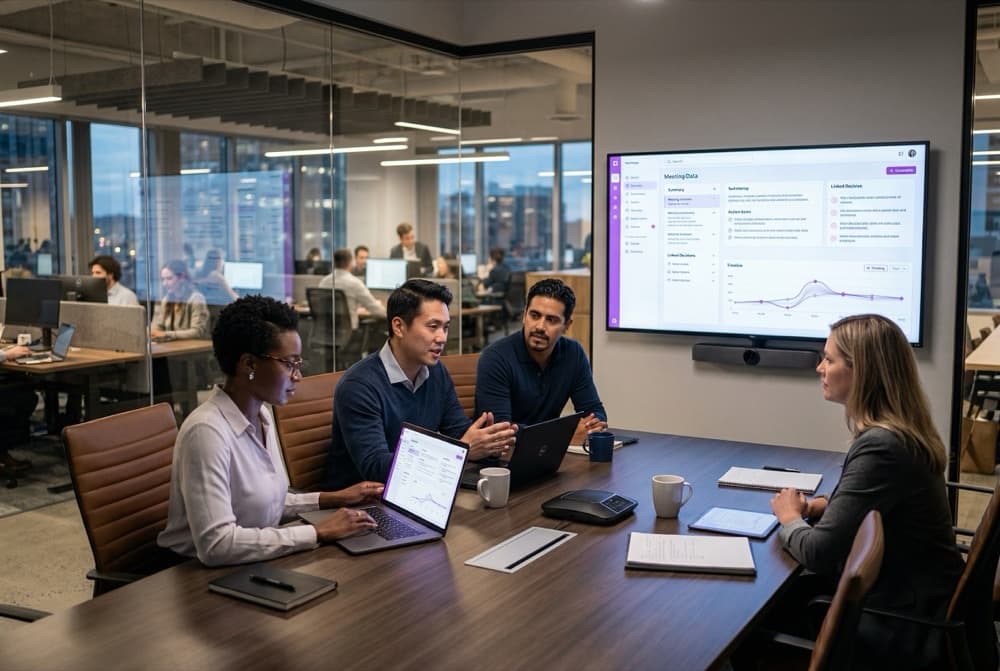
In the modern enterprise, the most valuable asset isn’t just data—it’s the context behind it. Yet, for most organizations, that context is trapped in a state of "meeting debt." Thousands of hours of strategic alignment, product pivots, and customer feedback are voiced, debated, and then promptly forgotten the moment the call ends.
We are entering the era of Memory Liquidity. It is no longer enough to simply record a meeting or generate a static summary. To maintain a competitive edge in 2026, leadership must transform dormant conversational data into a liquid asset: intelligence that is searchable, queryable, and accessible across the entire organization.
Beyond the Transcript: From Documentation to Retrieval
For years, the industry standard was "transcription-first." Companies felt protected if they had a text record of their calls. But a mountain of transcripts is just as inaccessible as a mountain of unrecorded audio. It creates a "write-only" memory—data goes in, but nothing ever comes out.
The mandate for today’s Operations and Knowledge Management leaders is a shift toward query-first workflows.
With Upmeet.ai, the value isn't just in the recording; it’s in the conversational retrieval. Instead of scrolling through months of notes to find out why a specific product decision was made in Q2, a Product Director can simply ask: "What were the specific objections the engineering team had regarding the API migration in March?" Upmeet synthesizes the answer from the actual meeting archive, providing instant institutional memory.
Solving the "Brain Drain" with Persistent Context
Scaling enterprises face a recurring crisis: the loss of tribal knowledge. When a senior lead leaves the company, years of decision logic and historical "why" walk out the door with them. This "brain drain" forces new hires to reinvent the wheel, leading to strategic drift and operational friction.
Memory Liquidity solves this by creating a persistent, queryable record of organizational logic.
- For New Hires: Onboarding becomes a process of querying the archive to understand the evolution of a project.
- For Distributed Teams: Cross-functional context is available asynchronously, eliminating the need for "update meetings" that could have been a query.
- For Leadership: You gain a high-level view of themes across months of data, not just single-call summaries.
When your meeting archive is liquid, the "why" behind your strategy remains even when the "who" changes.
Engineering Internal Intelligence
The technical maturation of LLM context windows has changed the game. We can now synthesize themes across vast timelines. Upmeet doesn’t just tell you what happened today; it connects today’s conversation to the thread of a project started six months ago.
This isn't about generic AI fluff. It’s about practical infrastructure:
- Automated Structured Summaries: Every meeting produces immediate, actionable follow-ups.
- Conversational Querying: Natural language access to your entire history of spoken collaboration.
- Institutional Continuity: Bridging the gap between siloed departments by making meeting intelligence a shared resource.
The Competitive Edge of a Liquid Archive
Organizations that treat their meetings as ephemeral noise are operating with a cognitive disadvantage. They are forced to rely on flawed human memory and incomplete notes.
In contrast, companies that embrace Memory Liquidity operate with a "collective brain." They move faster because they don't repeat mistakes. They align better because the "source of truth" isn't a static document—it’s the living record of their best collective thinking.
Conclusion: Turn Your Meeting Archive into an Asset
The meeting archive is the most underutilized data source in the enterprise. By moving from simple recording to active, conversational intelligence, you unlock a level of agility that was previously impossible. Stop losing your best ideas to the void of forgotten calls.
Ready to liquefy your institutional intelligence? Explore how Upmeet.ai transforms your meetings into a queryable knowledge base.