The 'Shadow Meeting' Crisis: Auditing Your Team’s Unrecorded Intellectual Property
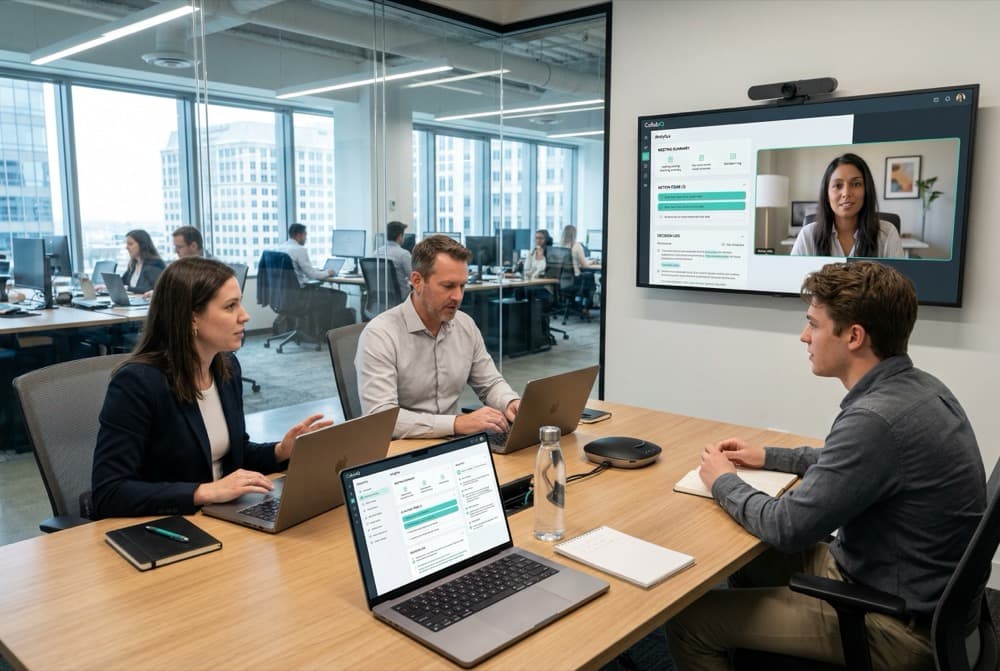
In the race to build "agentic workflows" and AI-driven operations, most leadership teams are looking at their tech stack, their LLM providers, and their clean data pipelines. But they are ignoring the single largest leak in their organizational intelligence: the shadow meeting.
Shadow meetings are the off-the-record syncs, the "quick huddles," and the undocumented follow-ups where the most critical project pivots and high-context decisions actually happen. When these conversations remain unrecorded, they don't just stay "in the room"—they effectively disappear from the company’s institutional memory.
For Operations Leads and CTOs at scaling startups, this isn't just a matter of poor note-taking. It is a strategic bottleneck that causes repeated debates, stalled onboarding, and a widening context gap in distributed teams.
The Cost of Undocumented Intellectual Property
When a decision is made in a 15-minute Zoom call without a system of record, that decision has a half-life. Within 48 hours, participants remember conflicting versions of the "why." Within a week, new hires are left guessing at the rationale behind a technical pivot.
This "shadow knowledge" is your team's most valuable intellectual property, yet it remains inaccessible to the rest of the organization—and more importantly, to the AI tools you are trying to deploy. You cannot build a company-specific AI workflow if the "source of truth" is locked in the heads of three engineers who had a chat on Tuesday afternoon.
From Scattered Oral Knowledge to Organizational Memory
To solve the shadow meeting crisis, teams must move beyond simple transcription. Real meeting knowledge management requires a layer of intelligence that turns raw audio into a searchable, actionable asset.
This is where Upmeet meeting intelligence transforms the workflow:
- Passive Capture, Active Context: By automatically recording and transcribing every sync, Upmeet ensures that "shadow meetings" are brought into the light. The oral history of the project is preserved exactly as it happened.
- Structured Summarization: No one has time to re-watch a 30-minute recording. Upmeet generates structured summaries that distill technical decisions, sentiment, and the specific "why" behind a pivot, making it easy for stakeholders to stay aligned without attending every call.
- Automated Follow-up Tracking: The transition from "talk" to "task" is where most projects fail. Upmeet automatically surfaces follow-up items and ownership, ensuring that meeting outcomes are integrated directly into your team’s execution layer.
Conversational Meeting Search: The Executive Interface
The ultimate strategic payoff of auditing your meeting IP is the ability to query your own history. Instead of digging through outdated Notion docs or hunting for a specific Slack thread from three months ago, conversational meeting search allows team members to ask:
- "Why did we decide to deprioritize the API refactor in February?"
- "What were the specific concerns the CTO raised about our scaling architecture last week?"
- "What are the outstanding action items from the last three product syncs?"
Upmeet enables this level of searchable meeting history, allowing teams to retrieve context instantly. This is the difference between a team that repeats the same arguments every month and a team that builds on a foundation of documented, searchable intelligence.
The Strategic Payoff: Continuity and Speed
For scaling and mid-market teams, the benefits of capturing meeting intelligence are immediate:
- Faster Onboarding: New hires can "search the past" to understand the evolution of a project, reducing the burden on senior leads to repeat historical context.
- Reduced Meeting Load: When everyone knows the "why" and "what next" is captured and searchable, fewer people need to be "in the room" just to stay informed.
- Better Continuity: In distributed environments, where asynchronous work is the norm, having a high-fidelity system of record prevents the "context rot" that happens across time zones.
Conclusion
The next phase of operational excellence isn't about finding a better AI model; it’s about feeding your existing workflows better data. Your team’s conversations are the highest-signal data you have. Leaving them as undocumented "shadow meetings" is a liability your competitors are already solving.
By auditing your unrecorded intellectual property and implementing a robust AI meeting assistant for teams, you aren't just taking notes—you are building a permanent, searchable brain for your organization.
CTA
Ready to turn your team’s oral knowledge into a strategic asset? Explore Upmeet.ai and start building your searchable organizational memory today.